Spinal decompression in Wagga Wagga.
For sciatica and disc bulge.
Full assessment $140 $59
Non-surgical. Drug-free. Assessed before anything starts — and if decompression is not right for you, we will tell you.
- Non-surgical and drug-free
- Cervical and lumbar
- Assessed before anything starts
- X-rays in the same building
Non-surgical spinal decompression
How decompression actually works
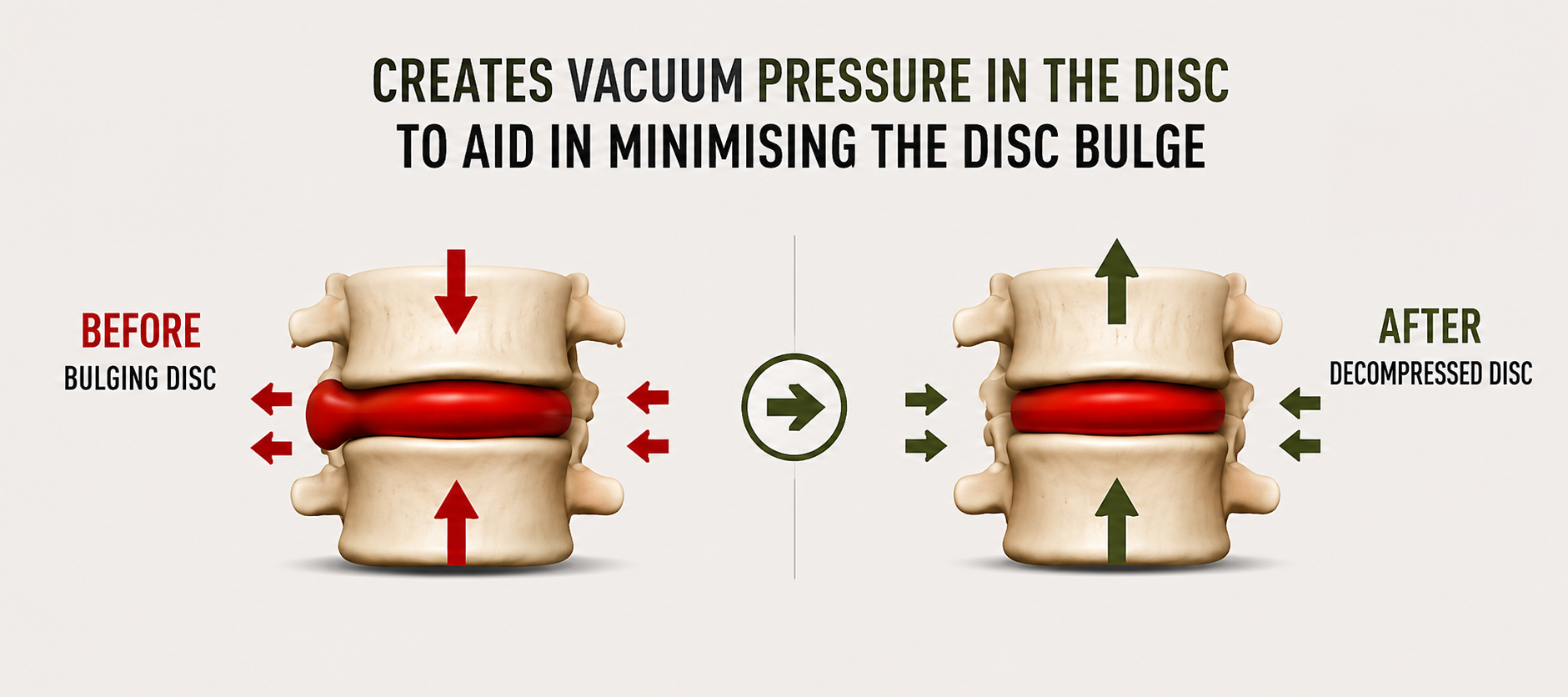
We now offer DOC spinal decompression at Baseline. A motorised table applies slow, computer-controlled traction to the spine — on and off in gentle cycles rather than one constant pull. It is designed to create space in the disc and ease pressure on the nerve.
Fully clothed. Lying down. Twenty to thirty minutes.
Spinal decompression is traction, but not the kind you may be picturing. A constant pull makes the muscles around the spine guard against it — the tissue tightens, and very little changes. The DOC table eases the pull on and off in slow, computer-controlled cycles, so the tissue has a chance to accept the stretch instead of bracing against it. That cycling is the whole difference between decompression and plain traction.
You lie down fully clothed and we harness you at the pelvis or, for the neck, support you at the head. The table then works through its cycle for twenty to thirty minutes. Nothing is sudden, you can feel exactly what is happening the entire time, and you can stop it whenever you want. Most people find it comfortable and a fair few find it relaxing.
The table can be set up for the cervical spine as well as the lumbar spine, and the angle of pull can be aimed at a specific level rather than applied to the whole spine at once. Where we aim it comes from your assessment findings — history, examination, posture scanning and imaging where it is indicated — not from a default setting.
The intention is mechanical: create a little space in the disc, and ease the pressure irritating the nerve. That is the reasoning behind decompression for disc-related pain and sciatica, and it is why the assessment matters so much. Pain down the leg does not automatically mean the disc is the source, and treating the wrong thing gently is still treating the wrong thing.
Decompression is used as part of a plan, never as a standalone machine. It sits alongside chiropractic adjustments, retesting against your baseline, and exercise you can actually keep doing. Decompression may create the space; the rest of the plan is what helps you hold onto it.
It is not right for everyone. Recent spinal surgery with hardware, spinal fracture, severe osteoporosis, pregnancy, and some tumours and infections all rule it out. If that is you, we will say so at the assessment and talk through what else may help — no program pushed on you.
- Assessed before anything starts
- Cervical and lumbar
- X-rays in the same building
Who it suits
Is decompression right for you?
It may help if you have
- A diagnosed disc bulge or herniation
- Sciatica or nerve pain down the leg
- Ongoing low back pain that has not settled with other care
- Neck pain with pain or pins and needles into the arm
- Degenerative disc changes
It isn't right for everyone
- Recent spinal surgery with hardware
- Spinal fracture
- Severe osteoporosis
- Pregnancy
- Some tumours and infections
This is exactly why the assessment comes first. If decompression isn't right for you, we will tell you, and we will tell you what is.
Before and after
Real results from our clinic
Shared with written consent.


MRI, lumbar disc bulge


Posture scan, twelve weeks apart
One person's result, shared with written consent. Every spine is different. Results vary from person to person and this is not a guarantee of outcome — which is exactly why we assess before we treat.
The assessment
What the assessment involves
Four steps, before anything starts.
01
History
What has happened, and what it stops you doing.
How it started, what makes it worse, what you have already tried, and any scans or reports you already have.
02
Examination
A physical assessment, not a guess.
Movement, orthopaedic and neurological testing to work out whether the disc and nerve are genuinely involved.
What we check
- Movement and function testing
- Neurological screening
- Posture scanning to record your baseline
- Screening for anything that rules decompression out
03
Imaging where needed
X-rays in the same building.
If we need to see more before making a safe call, we can arrange it here, and we will tell you if a further scan is worth organising.
04
A straight answer
Whether decompression suits you, or whether it does not.
You leave with a plain explanation of what we found, a plan with the number of sessions and the cost, or an honest no.
You leave with
- A plain explanation of the findings
- A plan, with sessions and cost up front
- Or an honest no, and what may help instead
Not sure if it suits you?
Talk to us first
If you are not sure decompression is right for you, leave your number and Kurt will call you back. No obligation, no pressure, and you can ask whatever you want before committing to anything.
Decompression questions
What people ask us about decompression
What is spinal decompression?
It is traction applied by a motorised table under computer control. You lie down, fully clothed, and the table eases a gentle pull on and off in slow cycles for twenty to thirty minutes. The aim is to create a little space in the disc and take pressure off the nerve.
Does decompression hurt?
It should not. Most people describe it as a slow stretch, and plenty find it relaxing. You stay in control the whole time and we adjust the settings to your comfort. If anything is uncomfortable, we stop.
How many sessions will I need?
It is a course of care rather than a one-off, and the number depends entirely on what the assessment finds — how long you have had it, what the imaging shows, and how you respond to the first few sessions. You get the number, and the cost, before you commit to anything.
Do I need to have had an MRI first?
No, and you do not need a referral either. Bring any scan reports you already have. If we need imaging to make a safe call, X-rays are in the same building, and we will tell you if a further scan is worth arranging.
Can I claim decompression on private health, EPC or DVA?
In many cases yes, depending on your fund, your level of cover and your extras balance. EPC and DVA both have their own requirements set by your GP. We check what you are covered for before you book anything in, so there are no surprises.
How do I know if it's right for me?
That is what the assessment determines. Full history, examination, posture scanning and imaging if needed. Decompression is not suitable for everyone, and if it is not right for you we will tell you, and tell you what is.
Ready to give us a try?
Book your decompression assessment
$140 $59
Stop working around the pain. Lock in your first appointment. Limited new patient spots available each week.
If you're not 100% satisfied with your appointment, we won't charge you.
Suite 8, 325 Edward Street, Wagga Wagga NSW 2650
*Payment accepted at clinic
Contact us
Baseline Chiropractic
Clinic
Suite 8, 325 Edward Street, Wagga Wagga NSW 2650
Opening hours
- Monday to Friday 8:00am – 12:00pm, 2:00pm – 6:30pm
- Saturday Closed
- Sunday Closed
Phone
Book online